THE ARAB COMIX PROJECT: ARAB AND ARAB-DIASPORA GRAPHIC FICTION
  • Home
  • About
  • Contact
  • Sections
    • History & Background >
      • Political & Editorial Cartooning
      • Comic Strips & Comic Books
    • Emergent, Experimental, and Online Comix >
      • Alt- & Hybrid Comix
      • Oum Cartoon
      • Tok Tok & Samandal
      • Web Comix
    • Ongoing Serials (in English)
    • Existing & Forthcoming Titles (in English) >
      • Ahmed Naji, Using Life
      • Ganzeer: The Solar Grid
      • Hamid Sulaiman, Freedom Hospital
      • Leila Abdelrazak, Baddawi
      • Lena Merhej, Jam and Yogurt
      • Lina Ghabeih, An Education in Fear
      • Magdy el Shafee, Metro
      • Muqtatafat
      • Riad Sattouf, Arab of the Future
      • Tarek Shahin, Rise
      • The 99
      • Zeina Abirached, A Game for Swallows and I Remember Beirut
    • Selected Writers & Artists >
      • Magdy el Shafee
      • Mazen Kerbaj
    • Cultural & Political Context >
      • Censorship & Persecution
      • Academic Centers & Initiatives

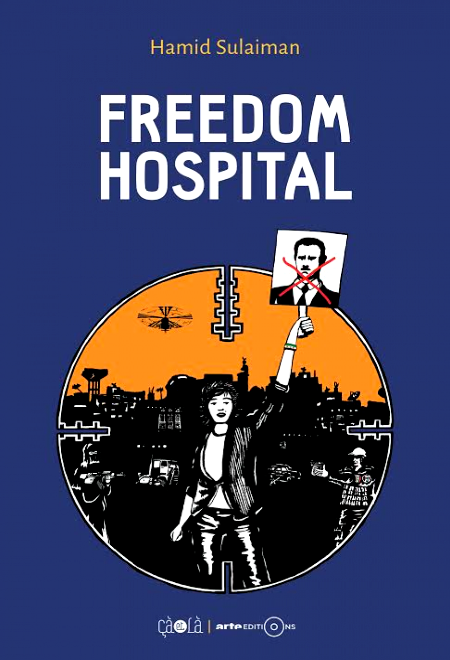
Hamid Sulaiman, ​Freedom Hospital

Picture
Picture

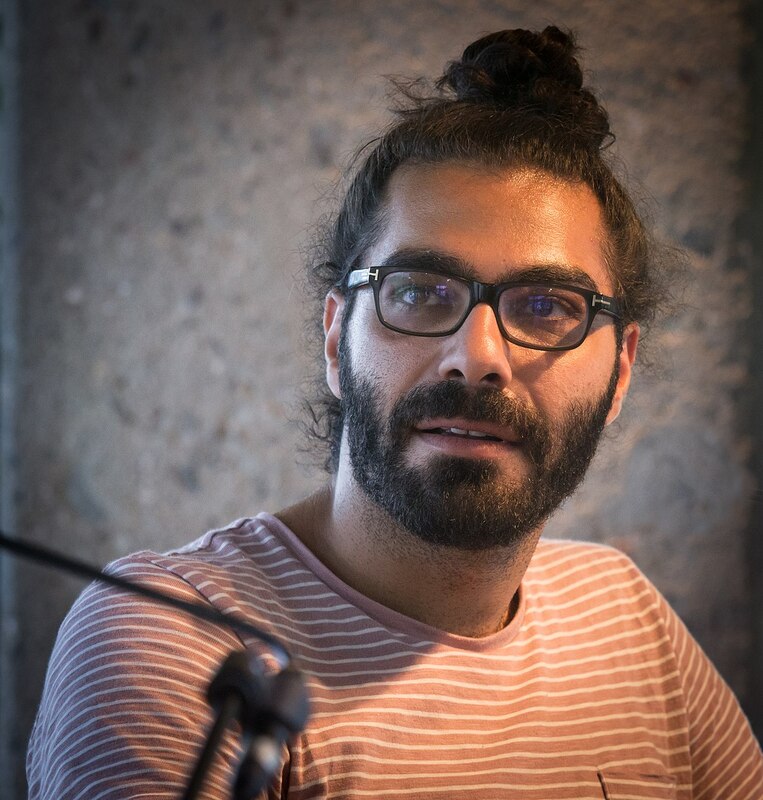
The Author

.                The year 2011 was not a comforting one for the lives of those living in Syria trying to avoid war. However, for those wanting revolution there was optimism. After 40 long years of the Assad regime there was a legitimate hope that freedom could be granted to Syria; the Arab Spring was upon them.
                One man in particular was named Hamid Sulaiman, a pacifist that took to the streets with the rest of his people in protest. Originally studying arcitechture, he began to work on graphic novels and exhibits in his home town of Damascus until the spring of 2011 when the revolt broke out. He jumped right into the fold creating and publishing anti-torture graphics and organized media coverage of the demonstrations. He was in jail briefly, and after his unexpected release, they gave him two options, to stay and pledge allegiance to Assad, or leave. He vacated his home and made for Egypt and submitted an application for a German visa, where he planned to stay only a few weeks until the revolution had taken down Assad. When it looked as though the fight was going to be much longer than he had anticipated, he moved to France where he studied comic art and has spent the last 4 years working on his 280 sheet graphic novel
Freedom Hospital...
Hamid Sulaiman was born in the year 1986. While living in Damascus and recieving a degree from the University he become fascinated with painting and pursuied this hobby until he became adept enough at the this art. Most of the art Sulaiman paints is very reminisent of revolutionary standpoints that bring about emotional ideas of how people who are less fortunante suffer within the middle east. He has participated in a number of galleries and art shows around the world such as; London, Paris, Berlin, and Vienna.

TIME LINE OF WORK AND LIFE

Made with Visme Presentation Maker
The Work

Picture

What is Freedom Hospital ?

Freedom Hospital is a graphic novel about a plethora of characters and a very complex situation. For Sulaiman's first entry into the graphic novel world, he did not make things easy on himself. The characters are fluid and change their minds over the course of the story. Yasmine for instance, (the character that Sulaiman stated is most similar to the people) is an optimist and believes the war will be over in a matter of weeks. A year later, she seems to understand that the war will not end anytime soon and she will do what she can to help the people as she always has.
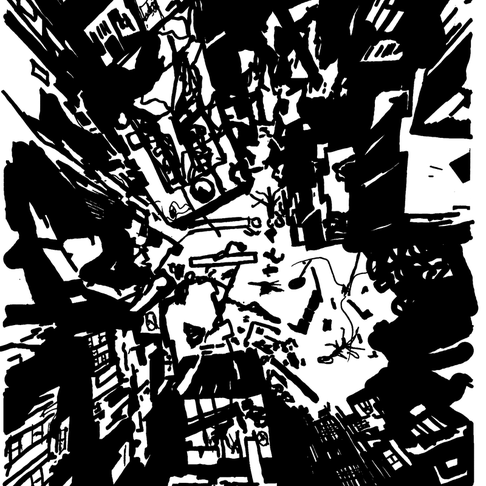
The Graphic novel follows a very stylized art pallet of the more noir oriented graphic novels such as "Sin City". There are many different characters within the graphic novel that have they're own small back story which all ties in within the Syrian Civil war and conflicts. The art style of the book encompasses the mood of the conflicts within the discourse of the book: the style fits the narrative and character development of the novel, especially with the different complex situations and personalities of each characters.
The main story opens up with the main protagonist called Yasmin; who by and large was the founder of the Freedom Hospital to help the war refugees and shelter anyone who was in need of help. The reason for the founding of the hospital was to aid the rebel forces in combating the Syrian Government regime. Throughout the novel the novel transitions to other individuals within the hospital such as Salem; who was shot in the head but survived, he remains to not have had much memory after the incident- though his short term memory remains intact more or less. Yasmin's friend Sophie the journalist; who has many connection's in many parts of the middle east, helps Yasmin travel behind the many different engagement's.

What makes it different?

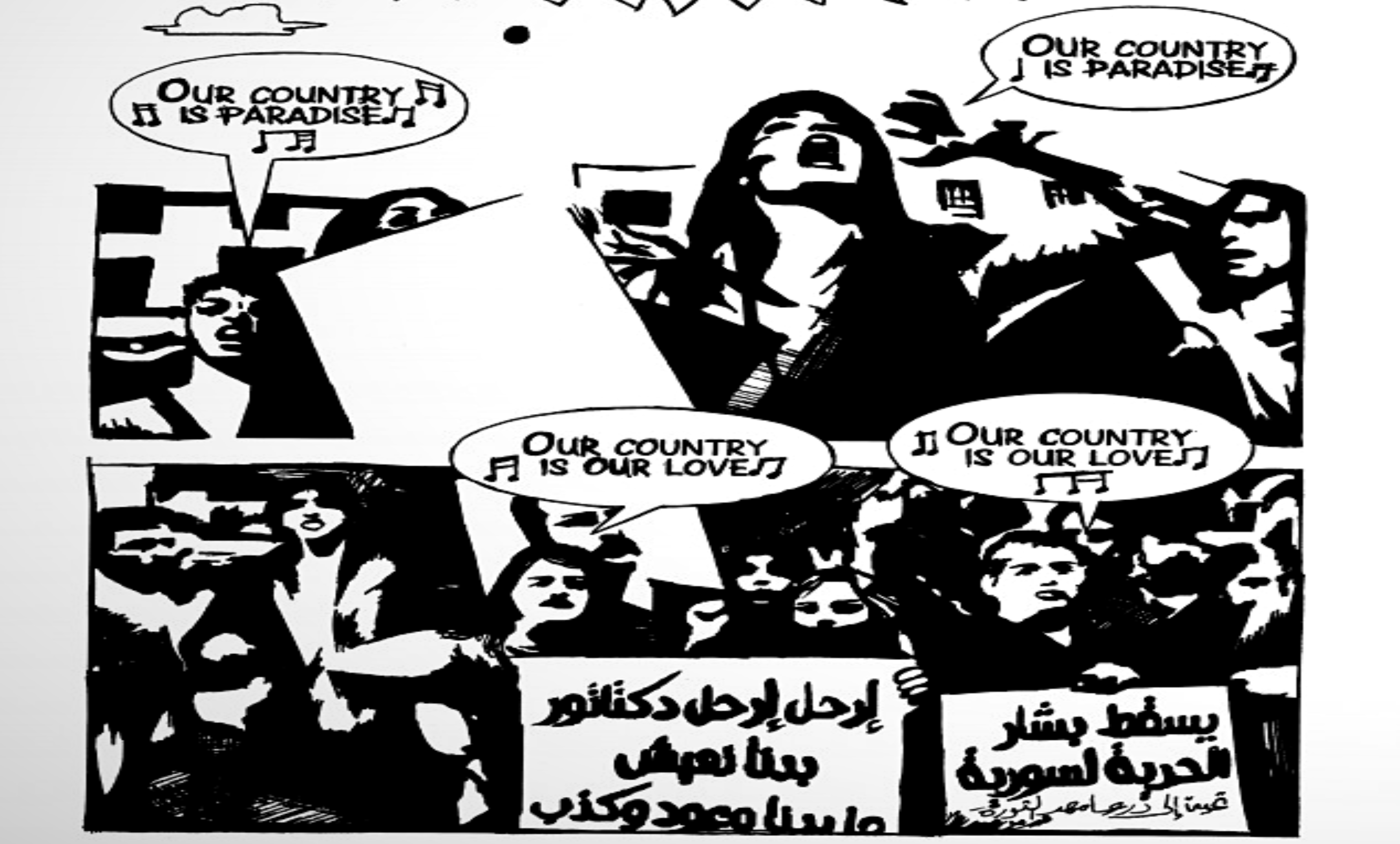
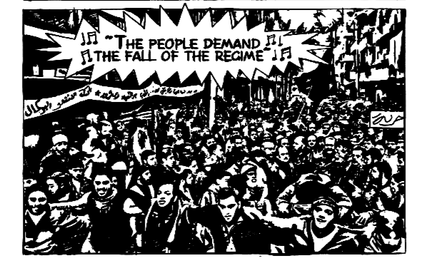
Sulaiman states in multiple interviews he takes a lot of his inspiration for his drawings and pannels from his real life experience. Below is an example of this kind of the eerie similarities of a scene from Freedom Hospital and a Syrian Riot during the revolution in 2011.
From Suleiman's background and perception what he was witnessing in front of his eyes: there has not been many similar types of graphic novels in this degree within this decade that showcases the Syrian conflict in this manner that can easily be assimilated toward a western audience and capture their attention. Sulaiman understands the market he is aiming for is the western population, but the novel does not alienate the core audience of the middle east who find solace within this work.
Picture
Picture
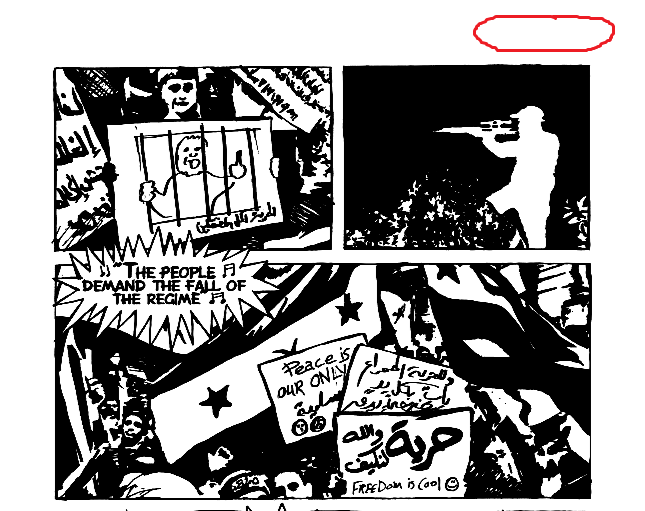
Throughout the novel, he takes care to point out where the weaponry comes from. Sulaiman says he is aware that war is a business and wants to point out where the countries that are interfering are making their profits. In the pannel bellow, in the top right corner above the sniper typically would be a designation of the name of the weapon and it's country of origin.
(The image below is taken from a gallery in Germany where Sulaiman talked about some of the pannels of his work and the book as a whole. For the purposes of the gallery they took out those subtle messages)
Picture
Sulaiman's novel, in actuality, covers a span of about five years from the start of the Syrian revolt until the end of 2015. His novel uses events from those five years and makes them take place over five seasons; Spring, Summer, Autumn, Winter and then Spring again. This seems like a way to metaphorically discuss the ways of how the Syrian Revolution has played out. 
In the end, all he wanted was to discuss the issues of the revolt and what is happening in Syria, the horrendous regime, and the lack of true change. Through all of this, he doesn't give up hope.
Picture

The Arab Spring Protest

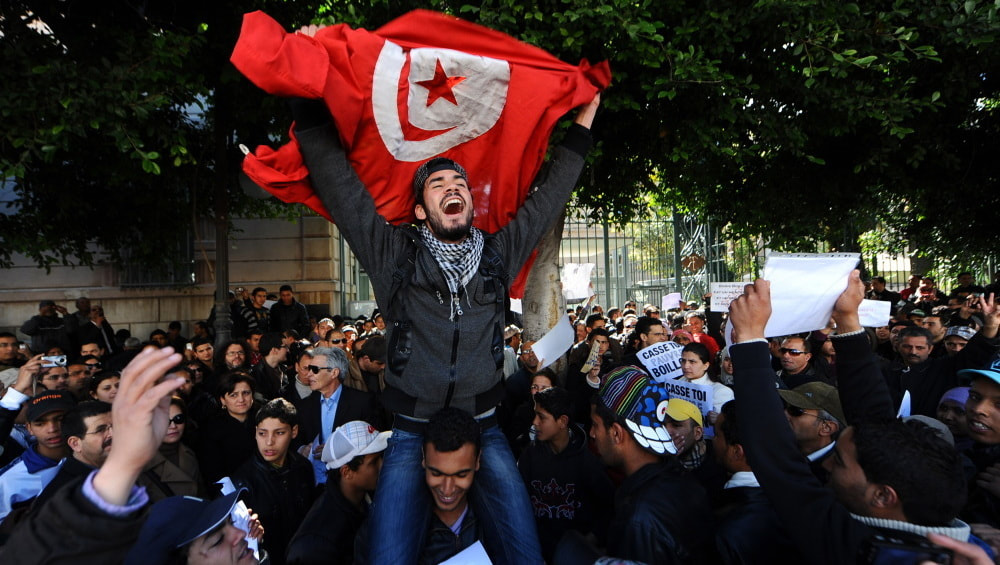
The majority of the graphic comic is based on the Arab Spring protest which took place in 2011. The reason for this protest had to with the oppressive colonist who imposed their regimes in these areas in the middle east. The protest focused bringing the culture that was lost during the insurgence of the western nations. Many dictators of the region were forced out of power such as Hosni Mubarak and Ben Ali of Tunisia.

Picture

The Syrian Civil War

There were four major players during the Syrian Civil War;  The ruling coalition led by Bashar Al Assad, The Islamic State Of Iraq and Greater Syria (ISIS),  the Islamic Front which was Jabhat al Nusra (JN), The Kurdish People's Protection Units (YPG). The Conflict erupted as a response to Assad's tyrannical ruling over Syria; though, the escalation led to many of the public to believe ISIS were responsible for many of tragedies- such as beheadings, killing journalists, and Christians. This conflict caused the influx of Syrian refugees looking to leave the country  forcing them to become displaced and having no country to call home anymore. 

The Syrian Civil war has been seen by people around the world too be one of the most destructive wars in history due to the fact of how many refugees were dislocated and left in shambles from the endless bombings from the insurgents. It is estimated that around 60,000 individuals have perished within the war and continue too. Assad's regime continue to push against the rebel forces; though, the violence is against the Sunnis and the Alawites. The groups who suffer the most from this war is the rural population because of their low income and remote establishments.

Why It all Matters?

The reason why these two conflicts are intertwined within this web page: is because of the entirety of the change in political and economical climate that was growing within the hearts and minds of the Arabic people. the graphic novel tackles the Arab Spring protest and how much it had impacted the nation as a whole and this in turn aided within the Syrian Civil War which grew into a much a larger conflict then anyone had intended or predicted.

Made with Visme Presentation Maker
Proudly powered by Weebly
  • Home
  • About
  • Contact
  • Sections
    • History & Background >
      • Political & Editorial Cartooning
      • Comic Strips & Comic Books
    • Emergent, Experimental, and Online Comix >
      • Alt- & Hybrid Comix
      • Oum Cartoon
      • Tok Tok & Samandal
      • Web Comix
    • Ongoing Serials (in English)
    • Existing & Forthcoming Titles (in English) >
      • Ahmed Naji, Using Life
      • Ganzeer: The Solar Grid
      • Hamid Sulaiman, Freedom Hospital
      • Leila Abdelrazak, Baddawi
      • Lena Merhej, Jam and Yogurt
      • Lina Ghabeih, An Education in Fear
      • Magdy el Shafee, Metro
      • Muqtatafat
      • Riad Sattouf, Arab of the Future
      • Tarek Shahin, Rise
      • The 99
      • Zeina Abirached, A Game for Swallows and I Remember Beirut
    • Selected Writers & Artists >
      • Magdy el Shafee
      • Mazen Kerbaj
    • Cultural & Political Context >
      • Censorship & Persecution
      • Academic Centers & Initiatives