About the Author
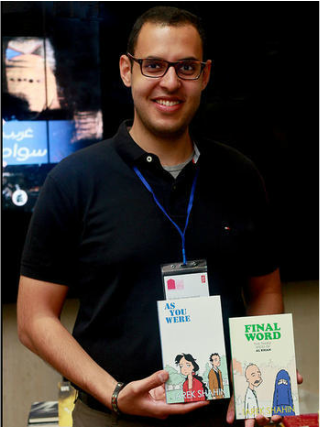
Tarek Shahin was born in 1982 and is an Egyptian cartoonist for the Daily News Egypt. He is most famous for his “Al Khan” comic strip series in which he is both the author and illustrator. The comic strip first appeared in The Daily News Egypt in 2008 and has continued to run independently on the series website. Shahin in his comic series has willingly chose to censor some of his messages through the use of subtlety in his “Al Khan” series. In article by the Middle East Eye he addresses his self censorship by stating “None of my work was ever censored [by the state] but not for lack of trying by the powers that be," he said. "Credit goes to my editor, who always fought on my behalf. I just didn't want to give them excuses to arrest me, and that was a reason for my series' longevity.” (Sorayef) He also states that it is just his style it adds comedic effect. In publishing Rise he hoped to reach out to an international audience because he was "sick of the generalizations that people make about other peoples" and to reach out to "the minority of people who gave a shit about something other than the damn football game." (Mary Whipple Reviews). Shahin also currently works as a banker in the city of London.
|
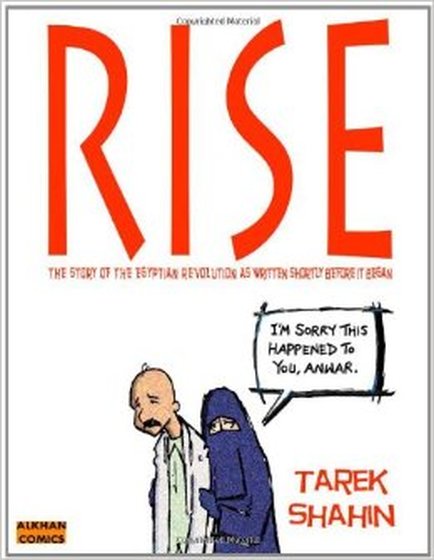
The work Rise is a compilation of the comic strips that appeared daily in the Daily News Egypt and independent English language newspaper from April 2008 through April 2010. The work focuses on the daily lives of an Egyptian Journalism team writing for the newspaper “Al Khan.” The work is meant to depict the political and social climate of Egypt in the months leading up to the Egyptian Revolution. The work is dedicated to the estimated 850 people who lost their lives in the peaceful pro-democracy protests that occurred between January and February of 2011. The comic strips follow the lives of five very different characters: Omar Shukri a liberal capitalist who has returned from London to take over his grandfather’s position as publisher of “Al Khan”, Nada Saleh a reporter and editor in chief of the paper with socially liberal views who is often in conflict and opposition to Omar, Yunan Saliba, an award winning 40 year old unmarried photographer who still lives at home with his parents, Dr. Anwar Abutaleb a devout Muslim and general practitioner who Omar often smokes shisha with, and Big Falafel a street beggar who offers an interesting perspective in his frequent conversations with Nada.
|
The Characters
|
Nada
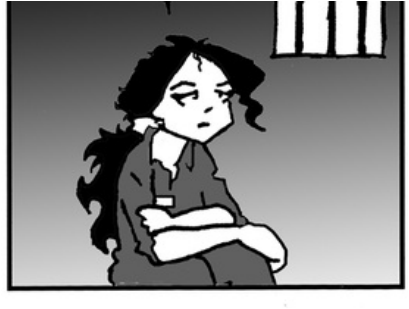
Nada Saleh is the editor in chief and investigative reporter for the newspaper Al-Khan. She is the daughter of an award winning actress and unsuccessful playwright. As a journalist she is committed to exposing corruption, fighting for womens’s rights, and bringing change to the country. Her work is consistently criticized by Omar, who believes her work to be to provocative and extreme. Her voice brings perspective to voices that are often censored in Egyptian media and speaks for the working class. |
|
Anwar
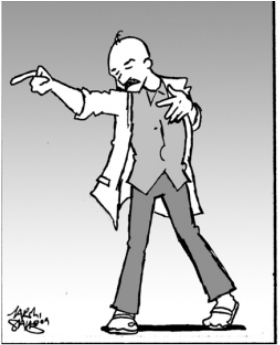
Dr. Anwar is a conservative Muslim who adds a traditionalist voice to the narrative. In his frequent talks with Omar over hashish they discuss politics, women's rights, and religion. While some of Anwar’s beliefs seem pretty extreme especially in regard to the treatment of women, he functions in the novel as mostly a critique of this conservatism. Though incredibly traditional, there are moments where Anwar does break tradition, for example his long friendship with a jewish student that he doesn’t know is Jewish. |
|
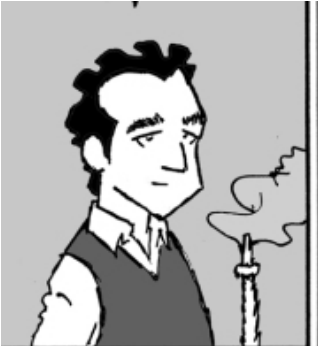
Omar
Omar Shukri is the newly appointed publisher of the newspaper Al-Khan. He has just returned to Egypt from his job a London banker to take over his grandfather’s position as publisher. In contrast to Nada he is more concerned with his own comfort and personal life than those of the Egyptian people. Thus, he is quick to censor or change Nada’s stories to help his uncle win an election or pursue anything else in his personal agenda. While at times he is incredibly selfish, he is often times very conscious and open minded to the issues in his country. His more liberal attitudes are are especially expressed in his conversations his staunchly conservative friend Dr. Anwar. |
|
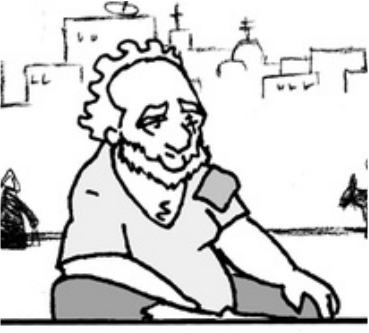
Big Falafel
Big Falafel is a mysterious character who currently lives on the streets of Cairo. He is a heavyset older man with only one eye. He sits and observes the daily occurrences happening on the streets of Cairo, such as food shortages, tax increases, and protests. Falafel’s character gives a perspective of the poor in Egypt and attitudes toward the poor. In the series he is very close to Nada who he often sits and talks with on the side of the road. His perspective on the current state of Egypt is incredibly spot on as he predicts many of the events that occur in Egypt before they began. |
|
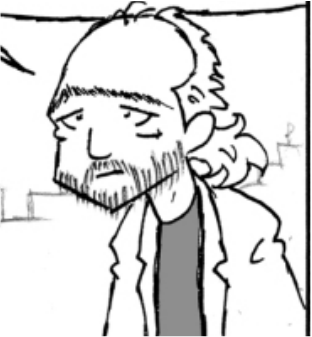
Yunan
Yunan Saliba is an award winning photojournalist for the newspaper Al Khan. Yunan is a middle aged Coptic Christian living in Egypt. His parents, who he still lives with have a significant influence on his life and shape many of his morals and values. He is a friend of both Omar and Nada which places him in the middle of many of their feuds. Yunan offers a unique perspective to the narrative as he never really takes a stance on any of the issues in the series, just observes and documents them. |
Future Projects/Other Works
IN additon In addition to Rise Tarek Shahin has published a comic series with the original characters of Rise after the Revolution titled As You Were which can be red on his website Al Khan Comics. In addition to comic his written a couple of editorials, opinion pieces, and cartoons for the Daily News Egypt which he links in his twitter. His most recent project is Redemption, from what we can in the trailer hopes to continue the Al Khan series but with possibly different characters.